Buy payza.eu ?
We are moving the project
payza.eu .
Are you interested in purchasing the domain
payza.eu ?
domain@kv-gmbh.de · 0541-91531010
Buy payza.eu ?
How do you calculate the braking distance, the braking process, and the braking deceleration?
The braking distance can be calculated using the formula: braking distance = (initial velocity^2) / (2 * deceleration), where the deceleration is the rate at which the vehicle slows down. The braking process involves the driver applying the brakes, which causes friction between the brake pads and the wheels, leading to a decrease in the vehicle's speed. The braking deceleration can be calculated by dividing the change in velocity by the time it takes for the vehicle to come to a complete stop. **
Is an online payment secure?
Online payments can be secure if proper security measures are in place. This includes using secure websites with encryption, using trusted payment processors, and being cautious with sharing personal and financial information. It's important to look for the "https" in the website URL and a lock symbol in the address bar to ensure the website is secure. Additionally, using strong and unique passwords for online accounts can also help enhance security. **


Similar search terms for Braking
Top-Angebote
Products related to Braking:
-
TP-LINK TL-PA9020PKIT 2-Port Gigabit Passthrough Powerline Starter Kit, Data Transfer Speed Up to 2000 Mbps, Ideal for HD Video Streaming and Online Gaming, No Configuration Required, UK Plug, NewStandards and protocols : homePlug AV2, HomePlug AV, IEEE 1901,IEEE 802.3, IEEE 802.3u, IEEE 802.3ab.System requirements: Windows 8.1/8/7/Vista/XP, Mac OS, Linux.Power Output to Integrated Socket : 16 A 2X2 MIMO with Beamforming establishes multiple simultaneous Connections for you to enjoy higher power line speeds and greater stability 2 gigabit ports create secure wired Networks for desktops, smart TVs or games consoles Plug and play, no configuration required. Operating temperature: 0°C approx 40°C. Range - 300 meters in house Compatible with all AV2000, AV1200, AV1000, AV600, AV500 & AV200 powerline adapters.77,99 £*Shipping: 0,00 £Secure redirect to the provider
-
TP-LINK 1-Port Gigabit Passthrough Powerline Starter Kit, Data Transfer Speed Up to 1300 Mbps, Ideal for HD Video Streaming and Online Gaming, No Configuration Required, UK Plug (TL-PA8010PKIT), NewUltra-fast powerline speed: HomePlug standard compliant, high-speed data transfer rate of up to 1300 Mbps, ideal for ultra HD streaming and online gaming MIMO technology - line-neutral/line-ground 2×2 MIMO with beamforming ensures fast and stable connection Gigabit port - provide reliable high-speed wired connection for game consoles, smart TVs and NAS Keep your outlet - an integrated socket lets you power regular devices as normal and a built-in noise filter prevents them from interrupting the powerline signal Plug, pair and play - set up your powerline network and start enjoying fast wired connection in minutes Packaging may vary Brand TP-Link Hardware interface Ethernet Colour White Compatible devices Smart TV Product dimensions 7.2L x 13.1W x 4.2H centimetres Data link protocol Gigabit Ethernet Data transfer rate 1300 Megabits Per Second Item weight 0.47 Kilograms59,99 £*Shipping: 0,00 £Secure redirect to the provider
-
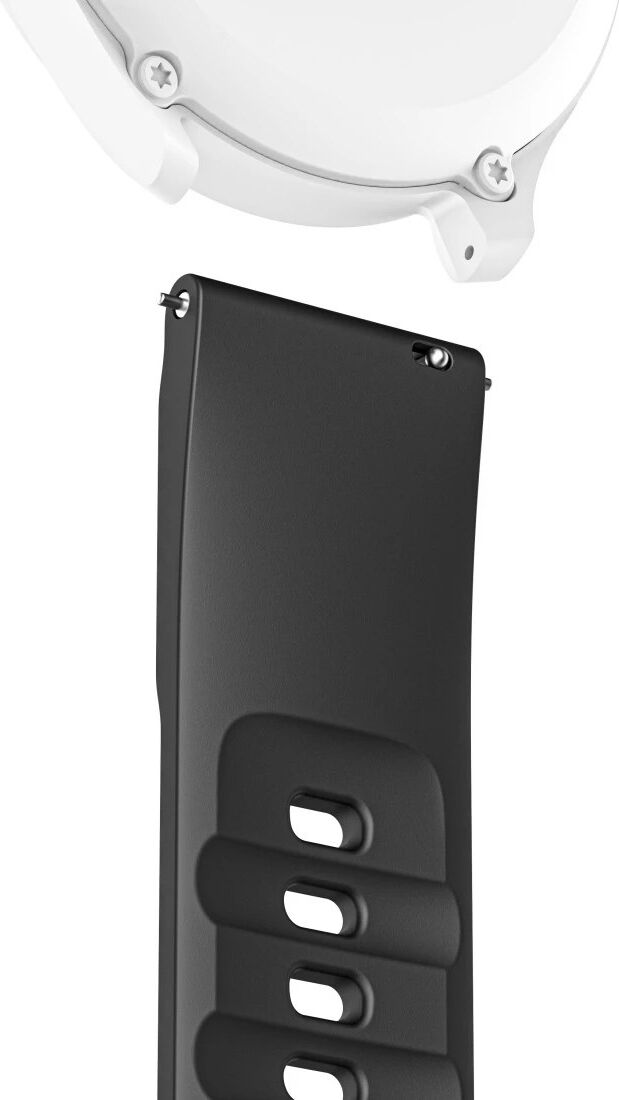
Hama NFC Payment Watch Strap, Silicone, 22 mm - BlackPay in the blink of an eye: with the payment wristband, you can leave your wallet tucked away. Simply upgrade your (smart)watch with the NFC wristband and pay contactlessly with ease. Spontaneous coffee runs or a quick stop at the bakery - make your everyday life a little less complicated.27,49 £*Shipping: 0,00 £Secure redirect to the provider




-
How do you calculate the braking time and braking distance?
Braking time and braking distance can be calculated using the formula: Braking distance = (initial velocity^2) / (2 * deceleration) Where initial velocity is the speed of the vehicle before braking, and deceleration is the rate at which the vehicle slows down. Braking time can be calculated by dividing the braking distance by the initial velocity. These calculations are based on the assumption of constant deceleration, and may vary depending on factors such as road conditions and the vehicle's braking system. **
-
What are the differences between braking to walking speed and braking?
Braking to walking speed typically involves gradually reducing speed until coming to a complete stop, whereas braking refers to the act of slowing down a moving vehicle. When braking to walking speed, the goal is to smoothly decelerate without any sudden stops, while braking may involve more forceful actions to slow down quickly. Additionally, braking to walking speed is often used in situations where a vehicle needs to stop at a precise location, such as at a crosswalk or intersection. **
-
How do you calculate braking time and braking distance in physics?
In physics, braking time and braking distance can be calculated using the equations of motion and the principles of kinematics. The braking time can be calculated using the equation t = v/u, where t is the braking time, v is the final velocity, and u is the initial velocity. The braking distance can be calculated using the equation d = (v^2 - u^2) / (2a), where d is the braking distance and a is the deceleration. These equations take into account the initial and final velocities, as well as the deceleration of the object to determine the braking time and distance. **
-
Is braking a reflex?
Braking can be considered a reflex in certain situations. When a driver reacts to a sudden obstacle or hazard on the road by immediately pressing the brake pedal, it can be seen as a reflexive action. This is because the response is automatic and occurs without conscious thought. However, braking can also be a learned behavior, as drivers are trained to use their brakes in specific situations through practice and experience. Therefore, while braking can be a reflex in some cases, it can also be a learned and intentional action. **

What is the difference between a full braking and an emergency braking?
Full braking refers to applying the brakes with maximum force in a controlled manner to slow down or stop the vehicle. This can be done in response to normal traffic conditions or when approaching a stop sign or traffic light. On the other hand, emergency braking is a sudden and forceful application of the brakes in response to an unexpected hazard or danger, such as a pedestrian stepping into the road or a vehicle suddenly stopping in front. Emergency braking is typically done to avoid a collision and requires quick reflexes and a strong, immediate response from the driver. **
What is the formula for braking acceleration and braking time in physics?
The formula for braking acceleration is given by \( a = \frac{v_f - v_i}{t} \), where \( a \) is the braking acceleration, \( v_f \) is the final velocity, \( v_i \) is the initial velocity, and \( t \) is the time taken to come to a stop. The formula for braking time can be calculated using the equation \( t = \frac{v_f - v_i}{a} \), where \( t \) is the braking time. These formulas are used to calculate the rate at which an object slows down when braking. **
Top-Angebote
Products related to Braking:
-
SQUARE Handheld Card & Contactless Payment TerminalTake payments wherever you are with the Square Handheld payment terminal. You customers can use chip and pin , contactless , and mobile payments like Google or Apple Pay. Just one straightforward processing rate of 1.75% with no surprises or hidden fees. And your money hits your bank account as soon as the next day. Use the barcode scanner to scan items, build baskets, count stock, or zap QR codes for discounts and memberships. There's also a camera to snap product shots to speed up listings and162,99 £*Shipping: 0,00 £Secure redirect to the provider
-
TP-LINK TL-PA9020PKIT 2-Port Gigabit Passthrough Powerline Starter Kit, Data Transfer Speed Up to 2000 Mbps, Ideal for HD Video Streaming and Online Gaming, No Configuration Required, UK Plug, NewStandards and protocols : homePlug AV2, HomePlug AV, IEEE 1901,IEEE 802.3, IEEE 802.3u, IEEE 802.3ab.System requirements: Windows 8.1/8/7/Vista/XP, Mac OS, Linux.Power Output to Integrated Socket : 16 A 2X2 MIMO with Beamforming establishes multiple simultaneous Connections for you to enjoy higher power line speeds and greater stability 2 gigabit ports create secure wired Networks for desktops, smart TVs or games consoles Plug and play, no configuration required. Operating temperature: 0°C approx 40°C. Range - 300 meters in house Compatible with all AV2000, AV1200, AV1000, AV600, AV500 & AV200 powerline adapters.77,99 £*Shipping: 0,00 £Secure redirect to the provider
-
How do you calculate the braking distance, the braking process, and the braking deceleration?
The braking distance can be calculated using the formula: braking distance = (initial velocity^2) / (2 * deceleration), where the deceleration is the rate at which the vehicle slows down. The braking process involves the driver applying the brakes, which causes friction between the brake pads and the wheels, leading to a decrease in the vehicle's speed. The braking deceleration can be calculated by dividing the change in velocity by the time it takes for the vehicle to come to a complete stop. **
-
Is an online payment secure?
Online payments can be secure if proper security measures are in place. This includes using secure websites with encryption, using trusted payment processors, and being cautious with sharing personal and financial information. It's important to look for the "https" in the website URL and a lock symbol in the address bar to ensure the website is secure. Additionally, using strong and unique passwords for online accounts can also help enhance security. **
-
How do you calculate the braking time and braking distance?
Braking time and braking distance can be calculated using the formula: Braking distance = (initial velocity^2) / (2 * deceleration) Where initial velocity is the speed of the vehicle before braking, and deceleration is the rate at which the vehicle slows down. Braking time can be calculated by dividing the braking distance by the initial velocity. These calculations are based on the assumption of constant deceleration, and may vary depending on factors such as road conditions and the vehicle's braking system. **
-
What are the differences between braking to walking speed and braking?
Braking to walking speed typically involves gradually reducing speed until coming to a complete stop, whereas braking refers to the act of slowing down a moving vehicle. When braking to walking speed, the goal is to smoothly decelerate without any sudden stops, while braking may involve more forceful actions to slow down quickly. Additionally, braking to walking speed is often used in situations where a vehicle needs to stop at a precise location, such as at a crosswalk or intersection. **
Similar search terms for Braking
-
TP-LINK 1-Port Gigabit Passthrough Powerline Starter Kit, Data Transfer Speed Up to 1300 Mbps, Ideal for HD Video Streaming and Online Gaming, No Configuration Required, UK Plug (TL-PA8010PKIT), NewUltra-fast powerline speed: HomePlug standard compliant, high-speed data transfer rate of up to 1300 Mbps, ideal for ultra HD streaming and online gaming MIMO technology - line-neutral/line-ground 2×2 MIMO with beamforming ensures fast and stable connection Gigabit port - provide reliable high-speed wired connection for game consoles, smart TVs and NAS Keep your outlet - an integrated socket lets you power regular devices as normal and a built-in noise filter prevents them from interrupting the powerline signal Plug, pair and play - set up your powerline network and start enjoying fast wired connection in minutes Packaging may vary Brand TP-Link Hardware interface Ethernet Colour White Compatible devices Smart TV Product dimensions 7.2L x 13.1W x 4.2H centimetres Data link protocol Gigabit Ethernet Data transfer rate 1300 Megabits Per Second Item weight 0.47 Kilograms59,99 £*Shipping: 0,00 £Secure redirect to the provider
-
Hama NFC Payment Watch Strap, Silicone, 22 mm - BlackPay in the blink of an eye: with the payment wristband, you can leave your wallet tucked away. Simply upgrade your (smart)watch with the NFC wristband and pay contactlessly with ease. Spontaneous coffee runs or a quick stop at the bakery - make your everyday life a little less complicated.27,49 £*Shipping: 0,00 £Secure redirect to the provider
-
Hama NFC Payment Watch Strap, Silicone, 22 mm - BeigePay in the blink of an eye: with the payment wristband, you can leave your wallet tucked away. Simply upgrade your (smart)watch with the NFC wristband and pay contactlessly with ease. Spontaneous coffee runs or a quick stop at the bakery - make your everyday life a little less complicated.Powered by FidesmoReliable partner, uncomplicated setup: connect the payment wristband to the Fidesmo app and then add the credit or debit card to Fidesmo Pay– ready for contactless paymentSecure use of the payment wearablePay securely and contactlessly: the passive NFC chip is only activated when the wristband is approx. 2 - 4 cm from the card reader. A digitally encrypted token, derived from the linked card’s card number, is used in the payment wristband800+ partner banksHuge network: the Fidesmo app supports 800 banks worldwide, and this network is constantly being expanded - your bank is sure to be among themVisa and Mastercard certifiedHighest standards: Visa and Mastercard agree, which is why the entire payment wristband is certified, from the wristband to the app to the chipFor a web width of 22 mmUniversal measurement: with the standard web width of 22 mm, suitable for many analogue watches, Hama smart watches and other brandsSilicone wristband with stainless steel buckleTimeless and elegant: design harmonises with many wristwatches and smart watches, the soft yet robust silicone is comfortable to wear against the skin27,49 £*Shipping: 0,00 £Secure redirect to the provider
-
Hama NFC Payment Watch Strap, Silicone, 20 mm - BlackPay in the blink of an eye: with the payment wristband, you can leave your wallet tucked away. Simply upgrade your (smart)watch with the NFC wristband and pay contactlessly with ease. Spontaneous coffee runs or a quick stop at the bakery - make your everyday life a little less complicated.Powered by FidesmoReliable partner, uncomplicated setup: connect the payment wristband to the Fidesmo app and then add the credit or debit card to Fidesmo Pay– ready for contactless paymentSecure use of the payment wearablePay securely and contactlessly: the passive NFC chip is only activated when the wristband is approx. 2 - 4 cm from the card reader. A digitally encrypted token, derived from the linked card’s card number, is used in the payment wristband800+ partner banksHuge network: the Fidesmo app supports 800 banks worldwide, and this network is constantly being expanded - your bank is sure to be among themVisa and Mastercard certifiedHighest standards: Visa and Mastercard agree, which is why the entire payment wristband is certified, from the wristband to the app to the chipFor web width 20 mmUniversal measurement: with the standard web width of 20 mm, suitable for many analogue watches, Hama smart watches and other brandsSilicone wristband with stainless steel buckleTimeless and elegant: design harmonises with many wristwatches and smart watches, the soft yet robust silicone is comfortable to wear against the skin27,49 £*Shipping: 0,00 £Secure redirect to the provider
-
How do you calculate braking time and braking distance in physics?
In physics, braking time and braking distance can be calculated using the equations of motion and the principles of kinematics. The braking time can be calculated using the equation t = v/u, where t is the braking time, v is the final velocity, and u is the initial velocity. The braking distance can be calculated using the equation d = (v^2 - u^2) / (2a), where d is the braking distance and a is the deceleration. These equations take into account the initial and final velocities, as well as the deceleration of the object to determine the braking time and distance. **
-
Is braking a reflex?
Braking can be considered a reflex in certain situations. When a driver reacts to a sudden obstacle or hazard on the road by immediately pressing the brake pedal, it can be seen as a reflexive action. This is because the response is automatic and occurs without conscious thought. However, braking can also be a learned behavior, as drivers are trained to use their brakes in specific situations through practice and experience. Therefore, while braking can be a reflex in some cases, it can also be a learned and intentional action. **
-
What is the difference between a full braking and an emergency braking?
Full braking refers to applying the brakes with maximum force in a controlled manner to slow down or stop the vehicle. This can be done in response to normal traffic conditions or when approaching a stop sign or traffic light. On the other hand, emergency braking is a sudden and forceful application of the brakes in response to an unexpected hazard or danger, such as a pedestrian stepping into the road or a vehicle suddenly stopping in front. Emergency braking is typically done to avoid a collision and requires quick reflexes and a strong, immediate response from the driver. **
-
What is the formula for braking acceleration and braking time in physics?
The formula for braking acceleration is given by \( a = \frac{v_f - v_i}{t} \), where \( a \) is the braking acceleration, \( v_f \) is the final velocity, \( v_i \) is the initial velocity, and \( t \) is the time taken to come to a stop. The formula for braking time can be calculated using the equation \( t = \frac{v_f - v_i}{a} \), where \( t \) is the braking time. These formulas are used to calculate the rate at which an object slows down when braking. **
* All prices are inclusive of VAT and, if applicable, plus shipping costs. The offer information is based on the details provided by the respective shop and is updated through automated processes. Real-time updates do not occur, so deviations can occur in individual cases. ** Note: Parts of this content were created by AI.