Buy payza.eu ?
We are moving the project
payza.eu .
Are you interested in purchasing the domain
payza.eu ?
domain@kv-gmbh.de · 0541-91531010
Buy payza.eu ?
What happened to this digital camera sensor?
It appears that the digital camera sensor has been damaged or has malfunctioned. This is indicated by the distorted and discolored image it is producing. The sensor may have been exposed to physical damage, moisture, or extreme temperatures, causing it to no longer function properly. In this state, the sensor will likely need to be repaired or replaced in order to restore the camera's functionality. **
What is the particle model and what is the tau particle?
The particle model is a scientific theory that describes the behavior and interactions of subatomic particles. It explains the properties of particles such as their mass, charge, and spin, and how they interact with each other through fundamental forces. The tau particle is a type of subatomic particle that belongs to the lepton family, along with the electron and the muon. It is similar to the electron but is much heavier and has a shorter lifespan. The tau particle is involved in weak interactions and is produced in high-energy particle collisions, such as those that occur in particle accelerators. Its discovery in 1975 provided further evidence for the existence of the third generation of fundamental particles. **


Similar search terms for AMPRO-A103PM0508-Particle-Sensor
Top-Angebote
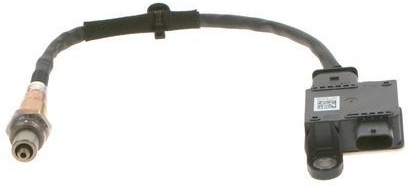
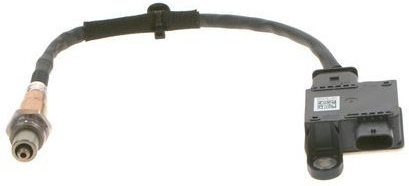
Products related to AMPRO-A103PM0508-Particle-Sensor:


-
What are particle pronouns?
Particle pronouns are pronouns that are used in combination with a preposition to indicate a specific relationship or direction. They are typically used to show the relationship between the subject or object of a sentence and other elements in the sentence. In English, common particle pronouns include words like "me," "him," "her," "us," and "them." These pronouns are essential for conveying precise meaning and clarity in communication. **
-
Is today a particle?
No, today is not a particle. Today is a concept that represents the current day in the calendar. Particles are tiny units of matter that make up everything in the universe. Today is a human construct used to organize time and events. **
-
Is an online payment secure?
Online payments can be secure if proper security measures are in place. This includes using secure websites with encryption, using trusted payment processors, and being cautious with sharing personal and financial information. It's important to look for the "https" in the website URL and a lock symbol in the address bar to ensure the website is secure. Additionally, using strong and unique passwords for online accounts can also help enhance security. **
-
How does heat transfer occur using the particle model in physics?
Heat transfer occurs using the particle model in physics through the movement of particles within a substance. When a substance is heated, its particles gain kinetic energy and begin to vibrate and move more rapidly. This increased movement causes the particles to collide with neighboring particles, transferring some of their kinetic energy to them. This process continues throughout the substance, leading to the overall transfer of heat. In the case of conduction, this transfer occurs through direct contact between particles, while in the case of convection, it occurs through the movement of particles within a fluid. **

What is the particle model?
The particle model is a scientific concept used to describe the behavior and properties of matter at the atomic and molecular level. It suggests that all matter is made up of tiny particles that are constantly in motion. These particles have spaces between them and interact with each other through forces such as attraction and repulsion. The particle model helps explain various phenomena in physics and chemistry, such as changes in state, diffusion, and the behavior of gases. **
Is 0 a virtual particle?
No, 0 is not a virtual particle. Virtual particles are particles that exist temporarily as intermediate states in particle interactions, but they do not correspond to real, observable particles. In contrast, 0 is a number that represents the absence of quantity or value, and it does not have the properties of a particle. **
Top-Angebote
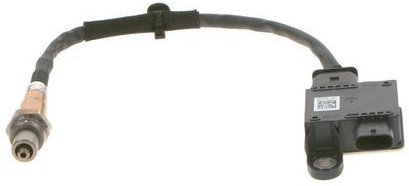
Products related to AMPRO-A103PM0508-Particle-Sensor:
-
What happened to this digital camera sensor?
It appears that the digital camera sensor has been damaged or has malfunctioned. This is indicated by the distorted and discolored image it is producing. The sensor may have been exposed to physical damage, moisture, or extreme temperatures, causing it to no longer function properly. In this state, the sensor will likely need to be repaired or replaced in order to restore the camera's functionality. **
-
What is the particle model and what is the tau particle?
The particle model is a scientific theory that describes the behavior and interactions of subatomic particles. It explains the properties of particles such as their mass, charge, and spin, and how they interact with each other through fundamental forces. The tau particle is a type of subatomic particle that belongs to the lepton family, along with the electron and the muon. It is similar to the electron but is much heavier and has a shorter lifespan. The tau particle is involved in weak interactions and is produced in high-energy particle collisions, such as those that occur in particle accelerators. Its discovery in 1975 provided further evidence for the existence of the third generation of fundamental particles. **
-
What are particle pronouns?
Particle pronouns are pronouns that are used in combination with a preposition to indicate a specific relationship or direction. They are typically used to show the relationship between the subject or object of a sentence and other elements in the sentence. In English, common particle pronouns include words like "me," "him," "her," "us," and "them." These pronouns are essential for conveying precise meaning and clarity in communication. **
-
Is today a particle?
No, today is not a particle. Today is a concept that represents the current day in the calendar. Particles are tiny units of matter that make up everything in the universe. Today is a human construct used to organize time and events. **
Similar search terms for AMPRO-A103PM0508-Particle-Sensor
-
Is an online payment secure?
Online payments can be secure if proper security measures are in place. This includes using secure websites with encryption, using trusted payment processors, and being cautious with sharing personal and financial information. It's important to look for the "https" in the website URL and a lock symbol in the address bar to ensure the website is secure. Additionally, using strong and unique passwords for online accounts can also help enhance security. **
-
How does heat transfer occur using the particle model in physics?
Heat transfer occurs using the particle model in physics through the movement of particles within a substance. When a substance is heated, its particles gain kinetic energy and begin to vibrate and move more rapidly. This increased movement causes the particles to collide with neighboring particles, transferring some of their kinetic energy to them. This process continues throughout the substance, leading to the overall transfer of heat. In the case of conduction, this transfer occurs through direct contact between particles, while in the case of convection, it occurs through the movement of particles within a fluid. **
-
What is the particle model?
The particle model is a scientific concept used to describe the behavior and properties of matter at the atomic and molecular level. It suggests that all matter is made up of tiny particles that are constantly in motion. These particles have spaces between them and interact with each other through forces such as attraction and repulsion. The particle model helps explain various phenomena in physics and chemistry, such as changes in state, diffusion, and the behavior of gases. **
-
Is 0 a virtual particle?
No, 0 is not a virtual particle. Virtual particles are particles that exist temporarily as intermediate states in particle interactions, but they do not correspond to real, observable particles. In contrast, 0 is a number that represents the absence of quantity or value, and it does not have the properties of a particle. **
* All prices are inclusive of VAT and, if applicable, plus shipping costs. The offer information is based on the details provided by the respective shop and is updated through automated processes. Real-time updates do not occur, so deviations can occur in individual cases. ** Note: Parts of this content were created by AI.